





Postman's AI-Native API Platform

SDLC Automation

Faster releases. Fewer production defects. Audit-ready every day.

Postman's AI-native platform re-shapes quality to run in parallel with development, so there is no compromise between velocity and rigor.

Download e-book

Trusted by teams at

PayPal logo
Moneris logo
Autodesk logo
Cover Genius logo
Siemens logo
ZEISS logo
PayPal logo
Moneris logo
Autodesk logo
Cover Genius logo
Siemens logo
ZEISS logo
SDLC Automation Playbook cover

The SDLC Automation Playbook for QE Leaders

A practical framework for embedding quality into every stage of your delivery pipeline, from spec governance to production monitoring.

SIX CHALLENGES

What's slowing teams down today

Before we get to how Postman fixes it, here's what we hear from QE and platform leaders across the industry. Six patterns show up everywhere, regardless of stack, scale, or maturity.

Challenge 1

Quality is structurally serial

The pipeline can't compress past the slower branch. As development accelerates through AI-assisted code, QE becomes the brake engineering tries to bypass.

  • Tests run after code; confidence doesn't accumulate, risk does
  • QE compressed into a final all-or-nothing release push
  • Development velocity widens the serial gap
Challenge 2

Testing tooling fragments along protocol lines

Each protocol gets a different tool with no unified coverage view, no portable test artifact, and no consistent quality bar across surfaces.

  • No unified picture of what is and isn't tested
  • Tooling spend grows linearly with production surface area
  • Coverage leaks at the seams between tools

Challenge 3

Tests rot faster than they're maintained

Flaky tests get muted, drift accumulates between spec and behavior, and maintenance cost scales until coverage falls well below what's actually required.

  • Flaky tests muted to keep the build green
  • Silent regressions slip through brittle scripts
  • Coverage ceiling falls below integration and long-tail services

Challenge 4

Audit evidence is a scramble, not a system

Engineering capacity gets diverted to manually collate test runs, change tickets, and approval trails across tools and quarters whenever an audit window opens.

  • Manual steps repeated for every test protocol and release
  • Evidence assembled retroactively, not as pipeline output
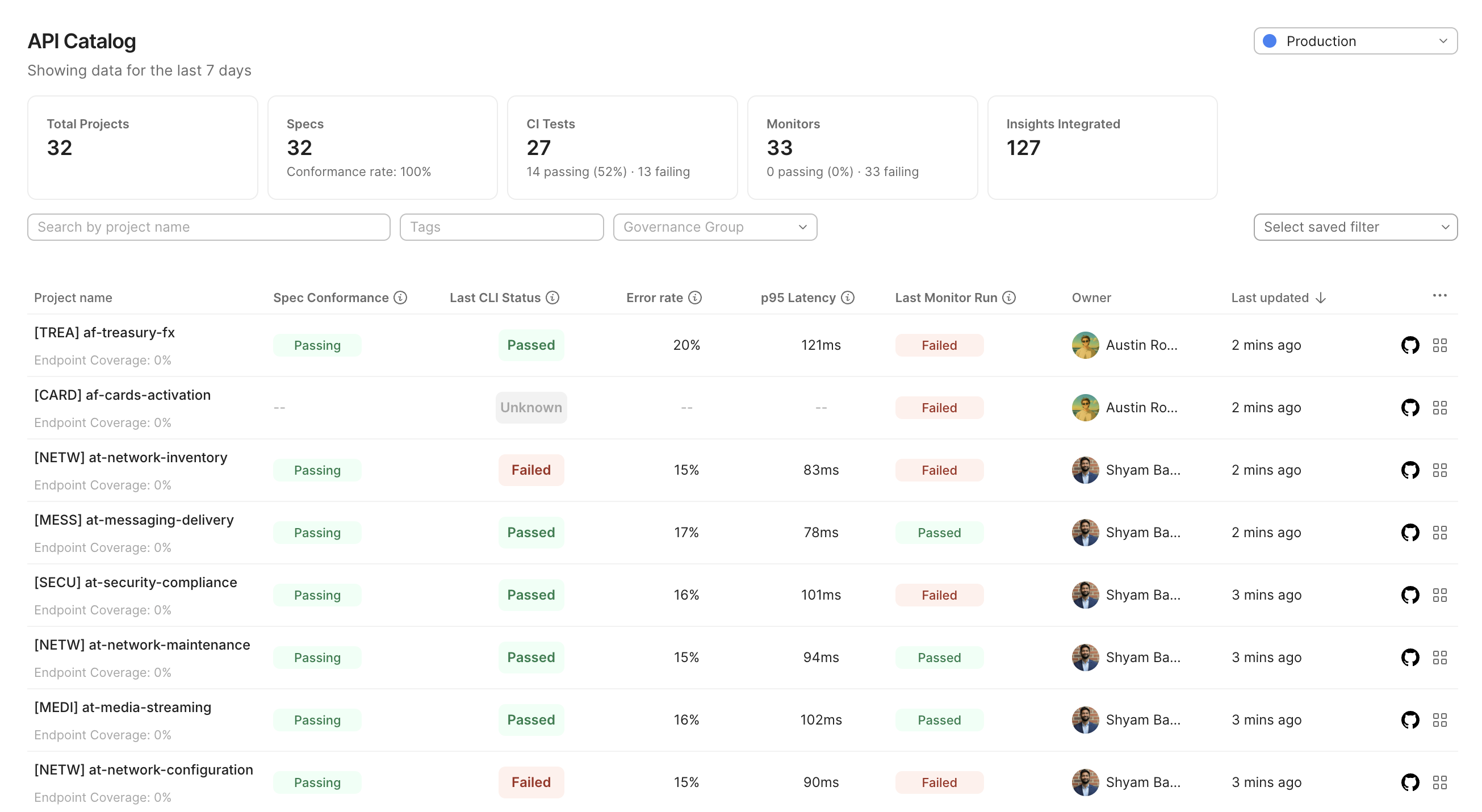
  • SEC, DORA, FedRAMP & PCI 4.0 make the scramble unsustainable

Challenge 5

Coverage concentrates in flagship services

High-revenue APIs get QE attention; the long tail doesn't. Flagship coverage masks the broader exposure until something breaks in production.

  • Defects cluster in the underinvested surface
  • Underinvested services least visible to engineering leadership
  • Exposure surfaces only when incidents land in production

Challenge 6

AI amplifies every gap in the pipeline

Build-time AI accelerates code output; runtime AI exercises APIs in unexpected ways. Both amplify a thin pipeline's weaknesses — a strong pipeline gets stronger, a weak one breaks faster.

  • Coding agents push more PRs than gates were sized for
  • Runtime agents fail creatively rather than consistently
  • AI test generation misses real failures without rich context
Postman reduced our testing cycle times by 70% and accelerated feature releases by three weeks, along with providing one of the best customer experiences I've ever had.”

Sathyakhala Anantharajan

Head of IT Applications, Medibank

THE POSTMAN PLATFORM

One pipeline, five integrated stages

Postman replaces fragmented serial workflows with a single platform. Each stage is gated, automated, and connected to the next.

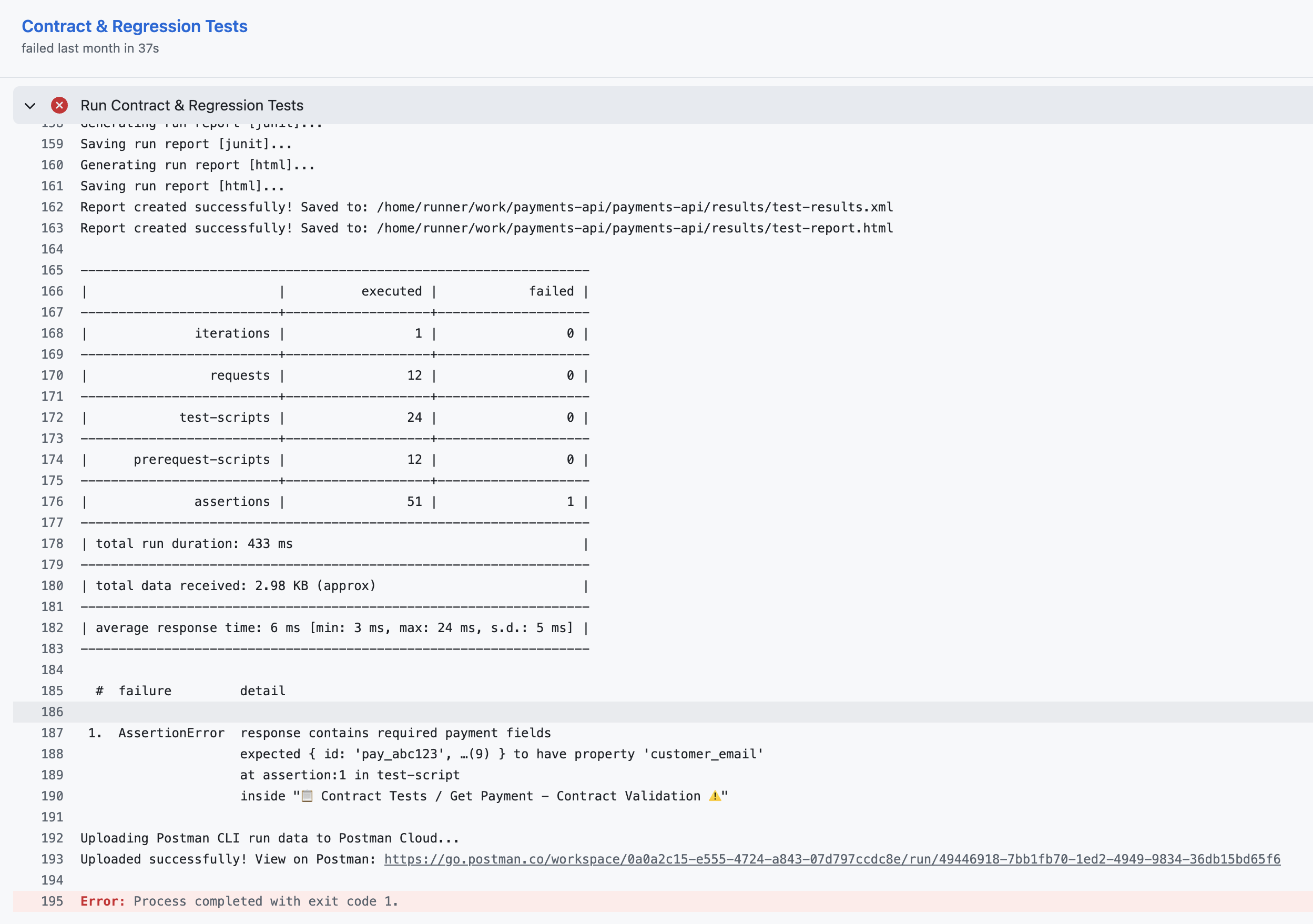
Postman validates your OpenAPI spec against governance rules before a single line of code is written. Teams work from a shared, versionable contract, not tribal knowledge or docs that drift from reality.

Start with a shared spec

  • Spec-first authoring with OpenAPI import
  • Governance rules enforced at design time
  • Collections as a shared executable source of truth
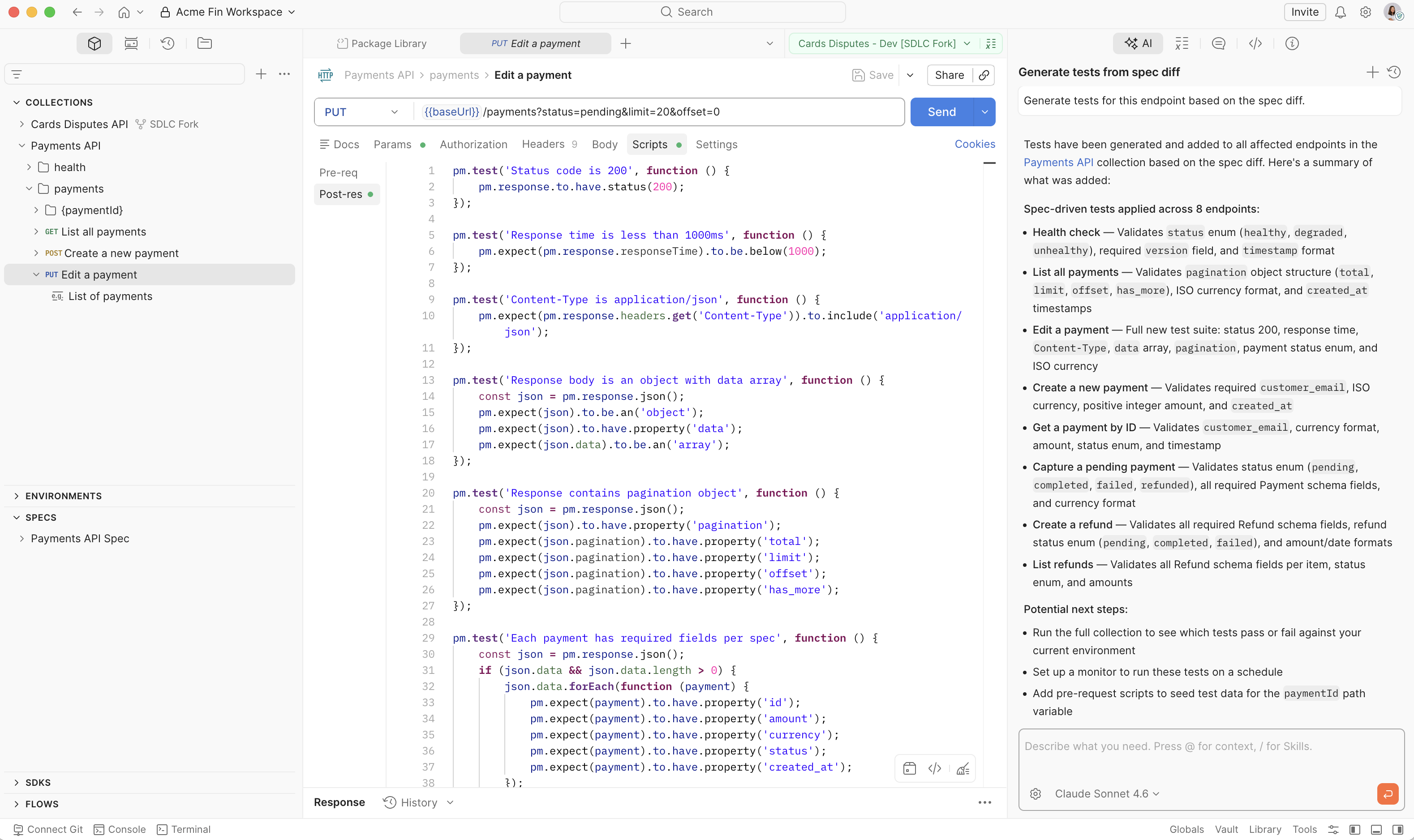
Postman API design view with OpenAPI spec

SPECTRUM OF TESTING

The full spectrum of testing in Postman

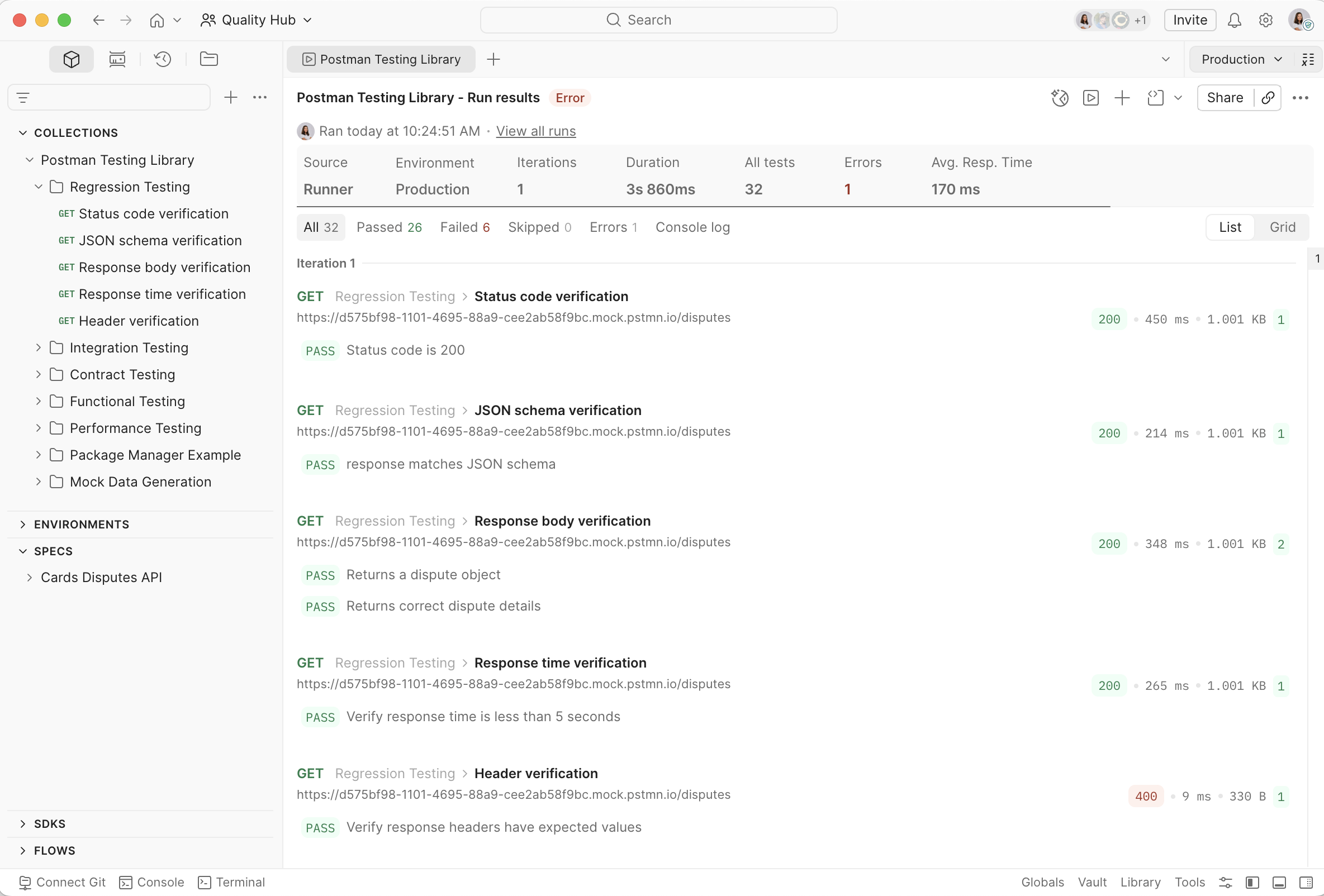
The journey above walks the QE function through stages. The orthogonal view is the kinds of testing the function actually has to perform — and where most QE programs fragment into separate vendor stacks. In Postman, the same Collections, the same scripts, the same environments, and the same execution surfaces cover the full spectrum.

Test typeStage 01DesignStage 02GateStage 03ValidateStage 04MonitorStage 05Improve
FunctionalEndpoint behavior: status, body, schema
ContractConformance to spec, breaking-change defense
IntegrationService to service, data flow, dependencies
End-to-endFull user journeys across services
RegressionChanges don't break what worked
PerformanceVU profiles: fixed, ramp, spike, peak
SecurityAuth, scope, injection, governance
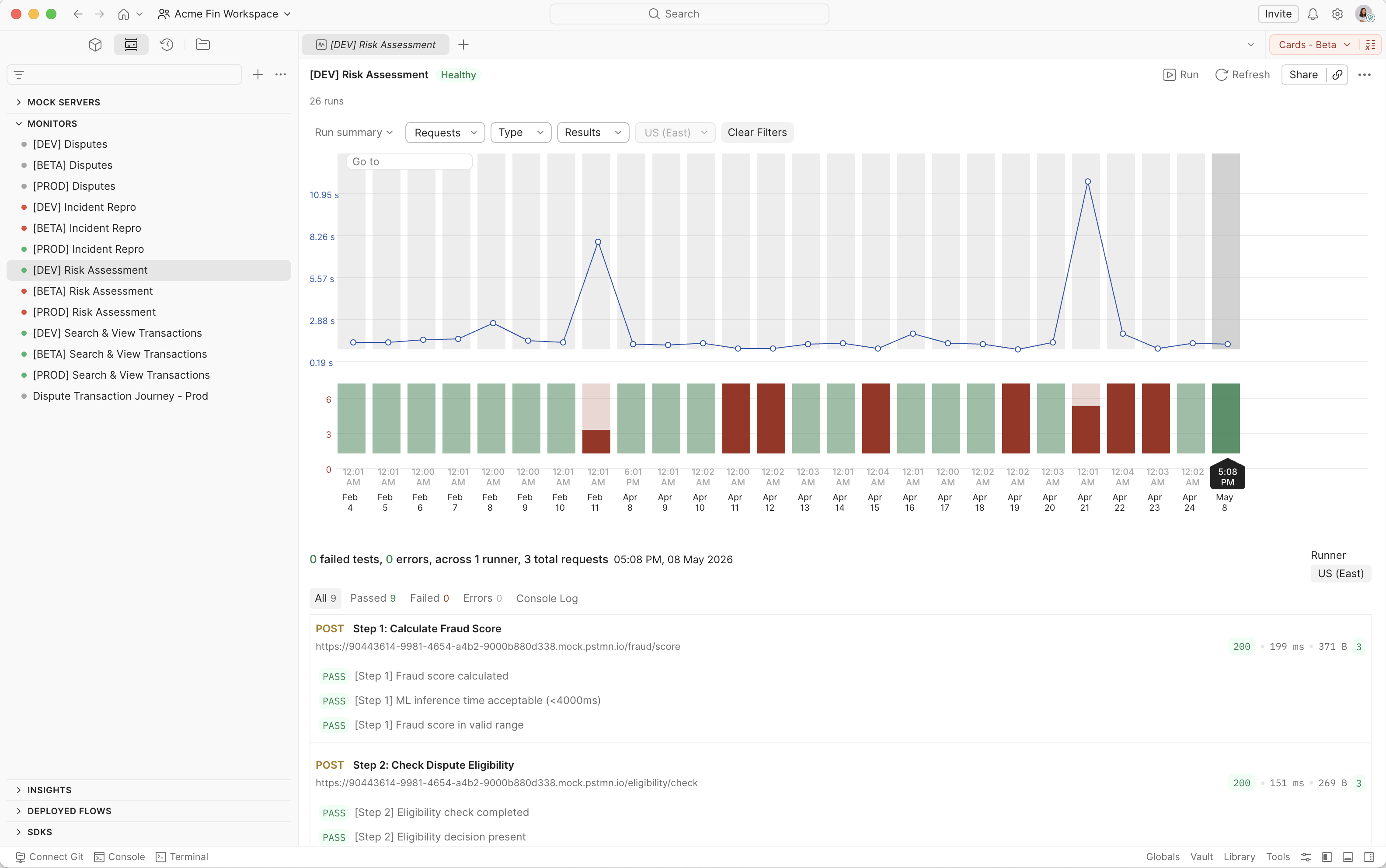
Synthetic monitoringContinuous prod and staging checks
KeyPrimarySecondaryNot applicable

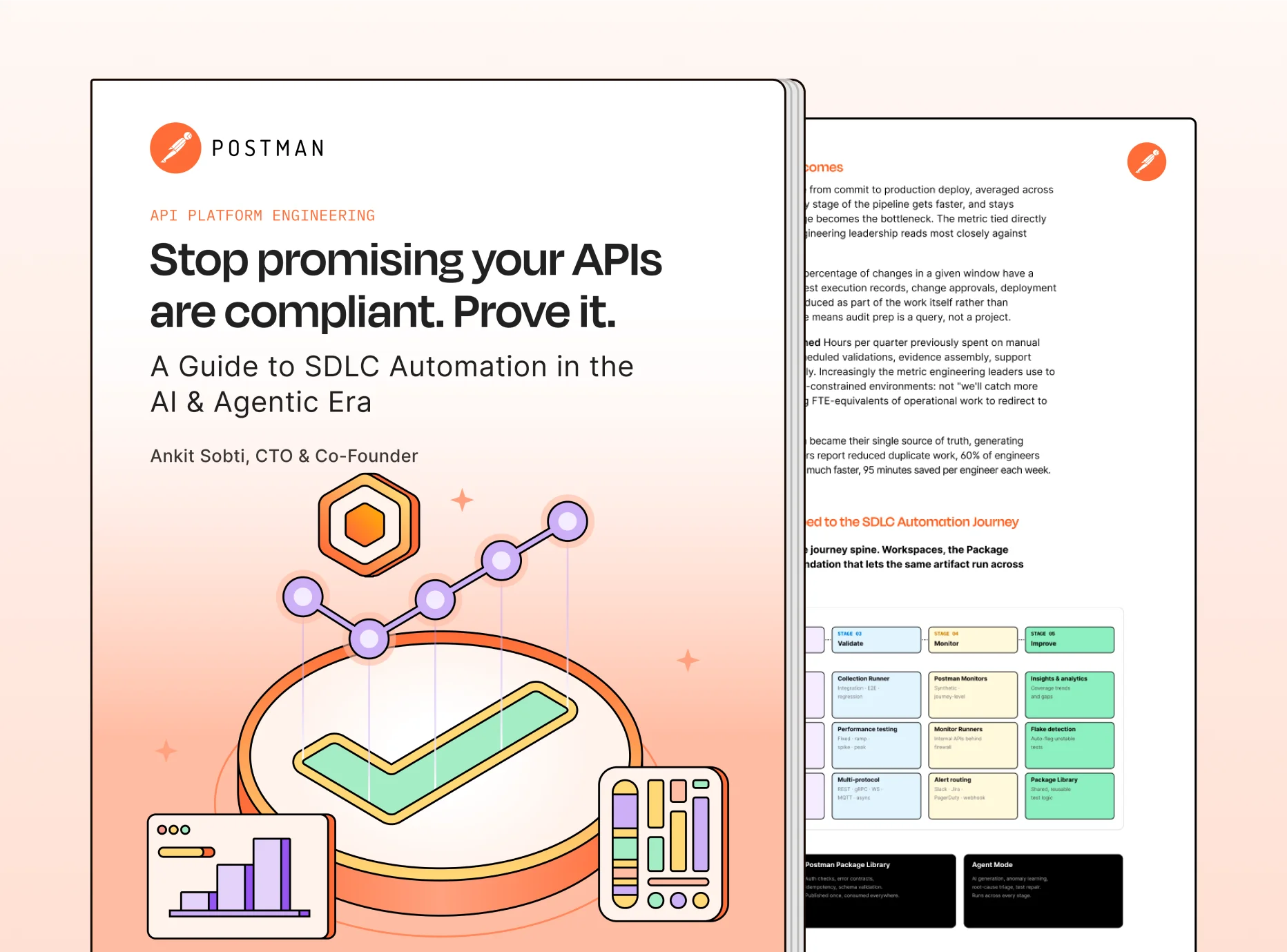
The SDLC Automation Playbook for QE Leaders

A practical framework for embedding quality into every stage of your delivery pipeline, from spec governance to production monitoring.

SDLC Automation Playbook cover